Skip to content
Black Friday Up to €120 off all pellet heaters Shop the deals

Buying guide

Comparing patio heaters: gas, electric or wood pellets

Want to stay outside longer on chilly evenings? Then a patio heater is a logical step. But which type suits you: gas, electric or a wood pellet patio heater? They all give off heat, but they differ greatly in atmosphere, convenience and where you're allowed to use them. In this buying guide we compare the three types honestly, downsides included.

FireRocket 165 cm with a flame in the glass tube on a patio at dusk, next to a lounge sofa.

Three types of patio heater

Gas patio heater

The classic gas patio heater runs on a gas bottle in the base. You open the valve, ignite the burner and the hood at the top spreads the heat.

Advantages

  • Warms up quickly, simple to operate and often adjustable.

Disadvantages

  • You have to fetch, refill or exchange gas bottles and store them safely.
  • You usually barely see the flame, and under a covered patio the manufacturer's rules are often strict.
Electric patio heater (infrared)

An electric patio heater usually works with infrared. It mainly heats the people and objects within its beam, not so much the air.

Advantages

  • Instant heat at the push of a button, no fuel, no ash and often suitable for use under a covered patio or on a wall.

Disadvantages

  • You need a power socket or fixed connection where you sit.
  • Outside the beam you feel little, and the atmosphere is functional: there's no flame.
FireRocket

Wood pellet patio heater

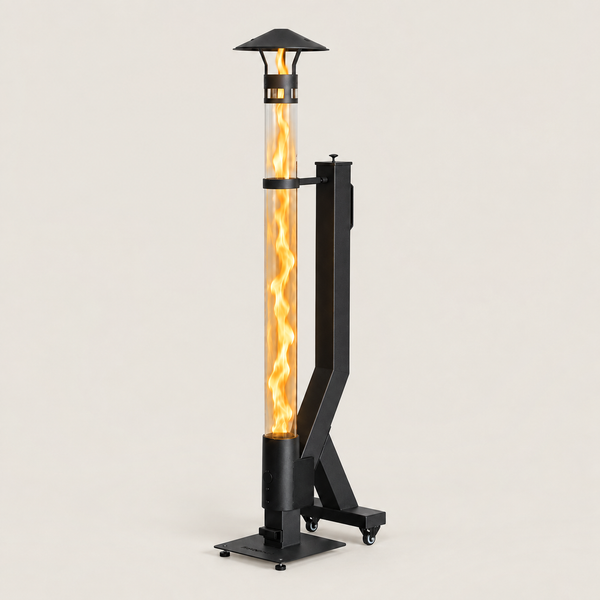
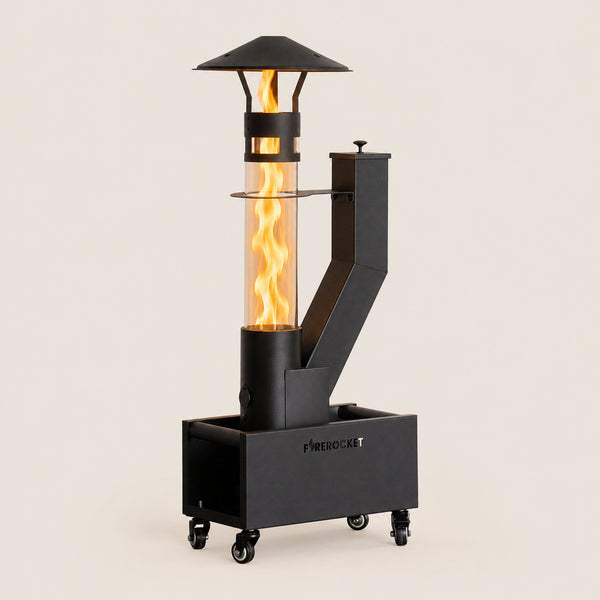
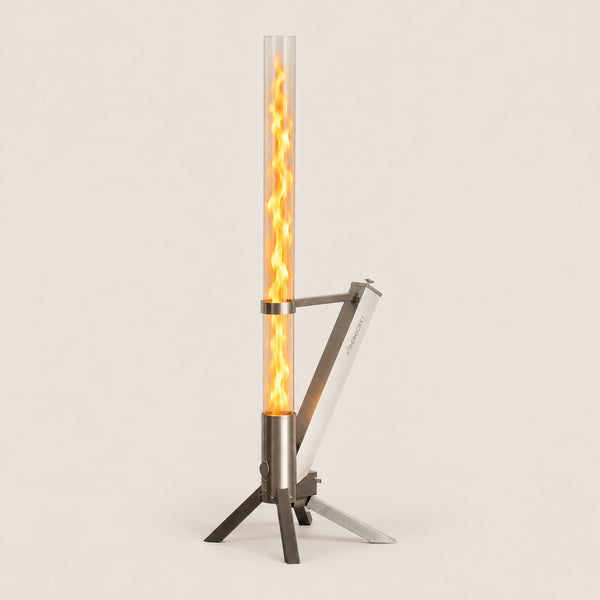
An outdoor pellet heater, such as the FireRocket, burns wood pellets from a hopper. You light it with the supplied gas torch attachment on a butane gas canister (canister not included). Then you see a real flame burning upwards in the glass tube.

Advantages

  • A real flame that gives off warmth and light.
  • No electricity and no gas connection needed while it's burning.
  • No cable: place it wherever it's safe.
  • No motor, fan or electronics.

Disadvantages

  • Lighting takes a moment and requires a butane gas canister.
  • Refilling if you stay outside longer than one hopper.
  • Letting it cool down afterwards and clearing the ash.
  • Do not use in rain or strong wind.
  • You need space: at least 40 cm clear above and around.

The three types at a glance

GasElectric (infrared)Wood pellets (FireRocket)
Connection neededGas bottlePower socket or fixed connectionNo electricity and no gas connection
Atmosphere and flameFlame usually hidden behind a hood or grilleNo flame, glowing lightReal flame visible in a glass tube
How the heat feelsHeat from above, around the poleTargeted heat within the beamHeat all around the heater, like a fire
Under a covered patioAccording to the manufacturer's rulesOften designed for exactly thatOnly if at least 25% of walls + roof is permanently open and 40 cm clear above and around
Moving itPossible, with the gas bottleLimited by cable or mountingOn wheels (94 and 165 cm), no cable
OperationOpen the valve and igniteOn/off, often with settingsLight with gas torch attachment on a butane gas canister, refill, clear ash
What you need per eveningGas from the bottleElectricityWood pellets (e.g. 1.8 kg per approx. 1.5 hours for the 94 cm)
In rain or strong windAccording to the manualDepends on model and locationDo not use

What to look for when choosing

Before you choose a patio heater, it helps to check a few things:

1

Your seating area

Is there a power socket, do you sit under a covered patio or out in the open garden?

2

Space

How much room is there around the heater, even when chairs are pushed back?

3

Your evenings

Do you sit outside briefly after dinner, or stay out all evening?

4

What matters to you

Just warmth, or atmosphere and light as well?

5

Storage

Do you have a dry place for a gas bottle, a bag of wood pellets or the heater itself?

Which one suits you?

Choose gas if

You want quick heat from a valve and don't mind fetching and storing gas bottles.

Choose electric if

You have a power socket where you sit, often sit under a (largely) closed canopy and don't want any steps before or after use.

Choose wood pellets if

You want a real flame and atmosphere, have no electricity or gas where you sit, and see lighting, refilling and clearing the ash as part of the evening. It really comes into its own on dry, chilly evenings around 10 °C.

View the pellet heaters

Unsure about the location? First read our article on a pellet heater under a covered patio.

Frequently asked questions

Which patio heater is cheapest to run?

That depends on current gas, electricity or wood pellet prices and on how much the heater uses. Work it out per evening: consumption per hour times the number of hours times your price. For a FireRocket, use your model's hopper capacity and burn time as a basis.

Can a wood pellet patio heater be used under a covered patio?

A FireRocket may be used under a covered patio if at least 25% of the walls and roof combined is permanently open and there is at least 40 cm of clear space above and around the heater. Never indoors, in a conservatory or in a garden room.

Do I need electricity for an outdoor pellet heater?

No. A FireRocket works without electricity and without a gas connection. You only use the supplied gas torch attachment on a butane gas canister, which you buy yourself, to light it.

Can I use a pellet heater in the rain?

No, don't use the heater in rain or strong wind. Store it and your wood pellets dry, for example under a cover or in the shed.