The question of how sustainable a pellet heater is deserves a nuanced answer. FireRocket does not sell pellet stoves for home heating, but electricity-free outdoor pellet heaters. They are designed to provide warmth, light and atmosphere on a patio or in a garden. That means they cannot be compared directly with a central heating boiler or heat pump. A fair assessment considers the fuel, emissions during burning, the product's lifespan and, above all, how you use it.
What does sustainability mean for outdoor heating?
With outdoor heating, some heat is always lost to the surroundings. Not using outdoor heating avoids its additional energy use and emissions. If you do choose fire and warmth outdoors, only heat where and when you actually use the warmth. A sheltered seating area may improve comfort, but does not automatically reduce the heater's wood pellet consumption. Maintain the required ventilation and safety clearances. Duration of use matters too. A heater lit only for an evening outdoors has a different impact from a patio heater burning for hours every day.
While burning, a FireRocket does not need mains electricity or a connected gas cylinder. For ignition, use a separate handheld gas torch as instructed in the manual; it is not included. The heater then burns wood pellets. This makes the appliance flexible to use, but does not mean the heat is automatically climate-neutral or emission-free. Every form of combustion releases substances.
Wood pellets as fuel
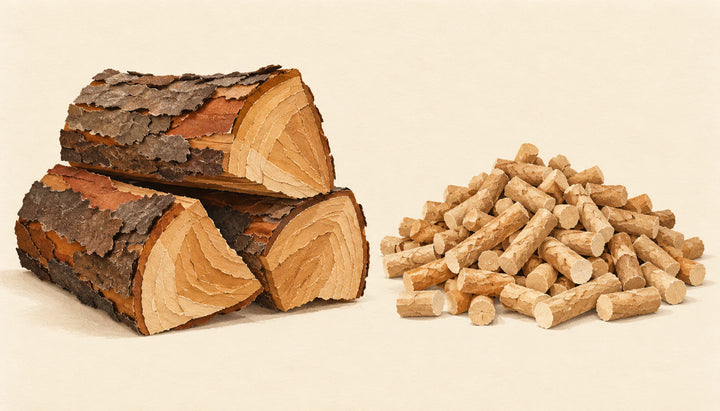
Wood pellets are compressed wood particles with a uniform shape and low moisture content. That consistent quality helps produce more even combustion than wet or variable firewood. Preferably choose wood pellets from a reliable source with recognised quality certification, such as ENplus A1, provided they are suitable for your FireRocket model.
Always keep wood pellets dry. Damp wood pellets can expand, break apart and burn less effectively. This can lead to more smoke and a less stable flame. Always consult your model's manual for the correct size, maximum load and safe ignition method.
Are wood pellets carbon-neutral?
The term ‘carbon-neutral’ is too absolute. Combustion releases carbon dioxide. Drying, pressing, packaging and transporting wood pellets also require energy. Their overall climate impact depends on factors including the wood feedstock, forest management, production method and transport distance. Wood pellets made from demonstrably responsible residual materials may have a different footprint from fuel of unknown origin, but they are not entirely without climate impact.
Smoke, particulate matter and air quality
Even a well-burning outdoor pellet heater is not emission-free. Wood combustion can produce particulate matter, carbon monoxide and other combustion products. With dry wood pellets, sufficient airflow and a clean appliance, combustion is generally more stable and visible smoke may be limited. That is not the same as ‘no emissions’.
Be considerate of the surroundings. Position the heater according to the manual, maintain sufficient distance from people and combustible materials, and prevent smoke from drifting towards neighbours, open windows or ventilation openings. Do not burn in conditions where smoke lingers, and check any local rules or wood-burning advice. Use a FireRocket outdoors only, never in a home, conservatory or another enclosed space.
Pellet heater, gas patio heater or electric patio heater
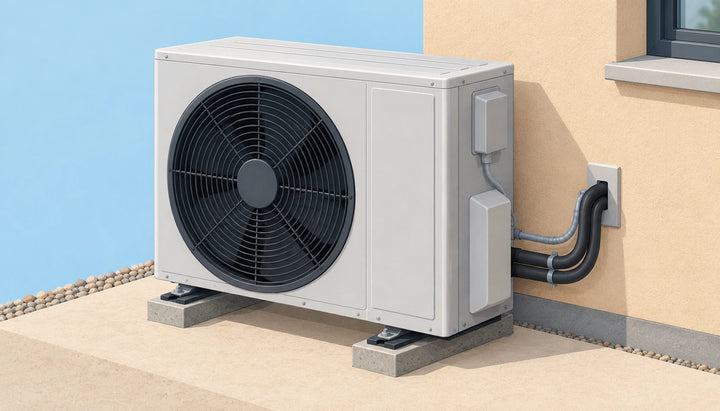
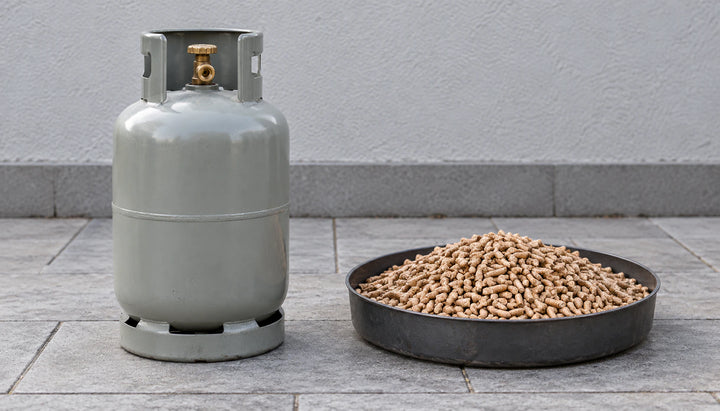
A gas patio heater uses a fossil fuel and needs a gas cylinder or connection. An electric patio heater produces no smoke at the point of use, but needs electricity; its overall environmental impact depends partly on the source of that electricity. A FireRocket burns without a connected gas cylinder or mains electricity, produces a visible flame display and uses wood pellets, but combustion does cause local emissions.
There is therefore no single option that is the most sustainable in every situation. If you only need targeted warmth in a fixed location, an electric infrared heater may sometimes be more efficient. If you want an electricity-free outdoor heater with real flames, you can choose a FireRocket and reduce its impact through thoughtful, correct use.
How to use a pellet heater as responsibly as possible
- Only heat the seating area, and only while you are present outdoors.
- Place the heater on a stable, non-combustible surface and follow all safety clearances in the manual.
- Use dry wood pellets of consistent, verifiable quality.
- Never use waste wood, treated wood, liquid fuels or other fuels not specified for the appliance.
- Keep the combustion chamber, air openings and components clean according to the maintenance schedule.
- Never leave a burning appliance unattended, and prevent smoke nuisance in the surrounding area.
- Store the heater and wood pellets dry and protected when not in use.
Lifespan and maintenance matter too
Sustainability is not only about fuel. An appliance that is used carefully, stored clean and dry, and has its fixings and glass checked regularly will generally last longer. Replace damaged parts promptly and use only suitable components. This avoids unnecessary replacement of the whole product and helps the heater continue to function safely.
Final verdict: how sustainable is a pellet heater?
An outdoor pellet heater is not emission-free, and wood pellets are not automatically carbon-neutral. FireRocket does offer an electricity-free alternative for people who want warmth and real flames outdoors without a connected gas cylinder while burning. Its ultimate impact is strongly influenced by the origin of the wood pellets, how it is used, its location and duration of use.
Want to view the models side by side? Browse all FireRocket outdoor pellet heaters. For a compact model, take a look at the FireRocket; for a taller model with a striking flame display, there is the FireRocket Pro.