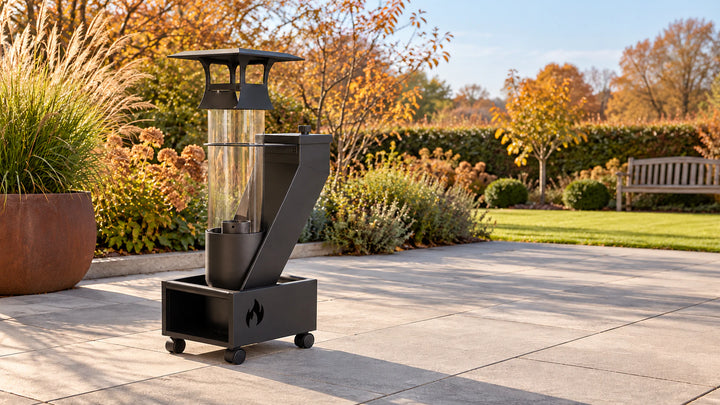
Is using a pellet heater cheaper than gas? For FireRocket, that comparison is not about heating a home. A FireRocket is an outdoor pellet heater and should therefore be compared with a gas patio heater. The answer depends on current fuel prices, actual consumption, duration of use and where you are heating. While burning, a FireRocket does not need mains electricity or a connected gas cylinder; a separate handheld gas torch is used for ignition.
Compare outdoor heating with outdoor heating
A central heating boiler heats an entire home and often domestic hot water too. An outdoor pellet heater provides local warmth and atmosphere around a patio. A calculation based on a household's annual gas consumption therefore says nothing about the running costs of a FireRocket.
A fairer comparison is: what does an hour or an evening outdoors cost with a FireRocket, and what does the same duration cost with a comparable gas patio heater? Look not only at the price of a bag of wood pellets or a gas cylinder, but also at the consumption of the particular appliance.
How to calculate fuel costs
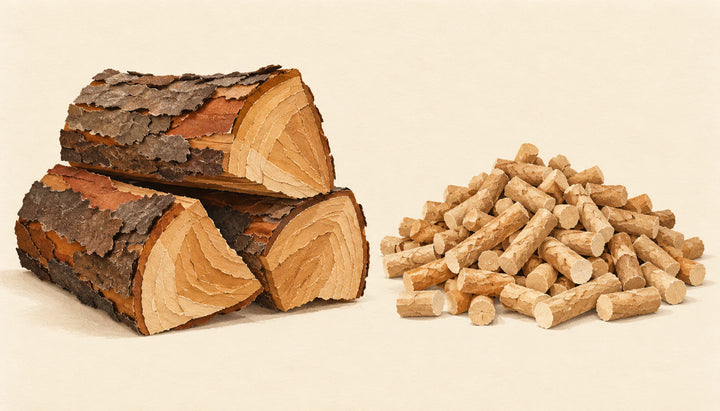
For a FireRocket, calculate the cost per hour using the current price per kilogram of wood pellets and your model's average consumption. For a gas patio heater, use the price per kilogram or per cylinder and the manufacturer's stated hourly gas consumption.
Calculation for wood pellets
Cost per hour = wood pellet consumption per hour × price per kilogram.
For example, divide a bag's purchase price by the number of kilograms it contains. Then multiply that price per kilogram by the heater's measured or stated consumption. Burn time can vary by model, fuel load, wind and use, so use your own practical figures where possible.
Calculation for gas
Is consumption stated in kilograms per hour? Cost per hour = gas consumption in kg per hour × price per kilogram of gas.
If consumption is stated in grams per hour, use: cost per hour = (gas consumption in grams per hour ÷ 1,000) × price per kilogram of gas.
Keep refundable deposits separate from running costs: they are a temporary outlay, not consumed fuel. Include only additional exchange and delivery charges actually payable, without counting the gas refill twice. Residual gas is only a loss if you can no longer use it or recover its value. Gas cylinder prices can vary considerably by size and retailer.
Why a simple price comparison falls short
Two patio heaters do not automatically provide the same feeling of warmth. A tall gas patio heater, an electric infrared heater and a FireRocket each distribute heat differently. Wind, distance from the seating area and the amount of shelter have a major effect on what you actually feel. An inexpensive hour of fuel can still be inefficient if most of the warmth misses the seating area.
Also compare:
- how close the appliance can safely stand to the seating area;
- how focused or dispersed the heat is;
- how long you normally sit outside;
- how much fuel remains after an evening;
- which atmosphere and light output matter to you.
Purchase and additional costs
The purchase price matters as well as fuel. A gas patio heater may have a different entry price from a pellet heater and requires a suitable gas cylinder, regulator and gas hose. Those components must be used safely and checked or replaced according to the instructions. While burning, a FireRocket does not need a connected gas cylinder or mains electricity. Include the purchase of a separate gas torch as well as wood pellets and fuel for ignition. Safe storage, cleaning and potentially replacement parts after wear also belong in the total costs.
For occasional use, purchase price often matters more than a small difference in fuel costs. With regular use, hourly consumption, fuel quality and the appliance's lifespan have a greater influence on the total cost.
Ease of use: gas versus wood pellets
A gas patio heater is often quick to ignite and can usually be adjusted immediately. In return, you need to connect, check and exchange a gas cylinder in good time. The cylinder takes up space and must be stored according to safety requirements.
A FireRocket is filled and lit manually. Starting it therefore takes more attention and time. While it is burning, you supervise it and can carefully top up the wood pellets. Do not touch the metal parts around the filling opening, keep the bag of wood pellets at a safe distance and follow the manual for your model. Once the heater has cooled completely, remove ash and check it. For many users, this ritual is part of the experience of a real fire.
Environment and local emissions
Gas is a fossil fuel. Wood pellets are made from wood, but are not automatically carbon-neutral. Production, transport and combustion all have an environmental impact. Both gas and wood combustion also produce emissions; a wood-burning appliance can additionally produce particulate matter and smoke.
Do not therefore use absolute claims such as ‘emission-free’ or ‘completely environmentally friendly’. Choose wood pellets of reliable quality, only burn while using the patio and avoid causing a nuisance. Consider wind direction and local wood-burning advice. A FireRocket must only be used outdoors in a sufficiently open space.
Safety differs by fuel
For a gas patio heater, safety involves the gas cylinder, connections, hose, regulator and leak checks, among other things. With a FireRocket, it involves a stable, non-combustible surface, safe clearances, hot surfaces, sparks, ash and supervision of a real fire. Both types of appliance must be used outdoors, according to the manufacturer's instructions and out of reach of children and pets.
When might a pellet heater be cheaper?
A pellet heater may be cheaper in your situation if good-quality wood pellets cost less per hour of use than the gas consumption of the heater you are comparing it with. However, that is not a given. Fuel prices and appliances vary, so a general promise such as ‘wood pellets are always cheaper than gas’ is not reliable.
FireRocket may also appeal for other reasons: while burning, you do not need a connected gas cylinder or socket, it produces real flames and serves as an atmospheric focal point on the patio. Those features do not have a fixed monetary value, but may still determine your choice.
Final verdict: pellet heater or gas patio heater?
Calculate current hourly costs for both appliances, then compare perceived warmth, ease of use, safety and maintenance. This tells you whether a pellet heater is both cheaper and more appealing than gas for your patio.
Browse all FireRocket outdoor pellet heaters. Among the options, you can compare the FireRocket and FireRocket Pro by size and use.