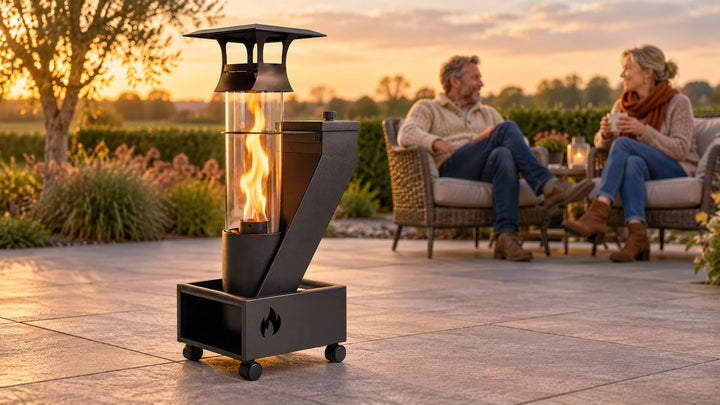
How much noise does a pellet heater make? The answer depends greatly on the type. An electrically powered indoor pellet stove can make noise from fans, a motor and a feed auger. A FireRocket is an electricity-free outdoor pellet heater and does not have those moving electrical components. During use, you therefore mainly hear natural combustion sounds.
The short answer: no fan or motor noise
FireRocket models do not need an electricity connection while burning. There is no electric convection fan blowing warm air around, no auger motor feeding wood pellets and no pump circulating water through a central heating system. The constant humming or blowing found in many pellet stoves for home heating is therefore absent.
A real fire is not completely silent, of course. Air moves through the appliance, wood pellets burn, and components heat up and later cool down again. You can hear those sounds on a quiet evening, but they have a different character from mechanical appliance noise.
Which sounds are normal for an outdoor pellet heater?
The sound of the flame and airflow
During steady combustion, you may hear a rushing sound from the flame and airflow. Its intensity can change with wind, wood pellet quality and the stage of the fire. Shortly after ignition, combustion sometimes sounds different from when the vertical flame is fully established.
Stronger airflow in a windy spot does not necessarily mean anything is faulty. It is important, however, that the heater stands securely and that air inlets and outlets remain clear. Always position the appliance according to the manual.
Wood pellets settling
A FireRocket has no powered feed auger. Wood pellets can still shift slightly or settle in the reservoir while burning. This can produce a brief ticking or rustling sound. The fire itself may also crackle gently, depending on the wood pellets and their moisture content.
Use dry wood pellets of consistent quality. Damp, very dusty or damaged wood pellets can burn more unevenly and leave more residue. FireRocket recommends good-quality ENplus A1 wood pellets; always check the fuel specifications in your model's manual.
Metal expanding and contracting
Metal expands as it heats up and contracts as it cools. You may therefore hear an occasional tick, particularly in the first few minutes after ignition or after the fire has gone out. This occurs with many metal outdoor heaters.
An occasional tick is different from constant loud rattling. If a panel, wheel or fixing keeps vibrating, do not add any more wood pellets and follow the safety advice below. Check the assembly only once all components have cooled completely.
Wind around the glass tube and cap
Outdoors, the surroundings determine much of what you hear. Wind moving past the cap, glass or a canopy can make a rushing sound. Loose objects on the patio, such as a protective cover, parasol or decorations, may also knock against the heater.
Maintain sufficient distance from loose and combustible materials. Never use a cover while the heater is burning or still warm. Store a protective cover where the wind cannot blow it towards the appliance.
Which sounds are not part of normal use?
A FireRocket should not scrape continuously, rattle heavily or move unstably across the surface. Watch for signs including:
- the glass or glass holder visibly moving and tapping constantly;
- a wheel, panel or fixing rattling in little wind;
- the appliance leaning or wobbling on the surface;
- metal scraping after components have been assembled;
- sudden loud sounds occurring together with an unusually tall or unstable flame;
- a component appearing deformed, cracked or loose.
If there is damage, instability or an unexpected change in the flame, keep people at a safe distance and do not add any more wood pellets. Do not move, disassemble or repair the heater while hot. Follow your model’s emergency instructions. If fire spreads outside the appliance or there is immediate danger, call 112. Inspect only after complete cooling, and do not use the heater again until the cause has been identified and resolved; contact us if in doubt.
Why do we not give a fixed decibel figure?
Online articles about pellet stoves often mention figures such as 30, 40 or 50 decibels. Those figures usually relate to electrically powered indoor stoves and are heavily influenced by fan speed, measuring distance and measurement method. They are not automatically applicable to an electricity-free outdoor heater.
We do not have a verified sound measurement with a specified measuring distance and conditions for the current FireRocket models. We therefore do not give a decibel figure. There is no continuous electric fan or motor noise. The flame, airflow and surroundings remain audible and can vary with the situation.
How do you prevent unnecessary rattling and resonance?
Assemble every component in the correct order
Follow the assembly instructions step by step, using the correct screws, nuts, holders and fixing points. A component fitted in the wrong place can move under the influence of heat or wind. Tighten fixings securely according to the manual, without forcing glass or fragile parts.
Choose a level, firm surface
An uneven patio can amplify noise. If not all supports or wheels make equal contact, the frame may move slightly. Position the heater on a level, non-combustible surface and lock any braked wheels as instructed in the manual. Do not use improvised soft pads that are not heat-resistant.
Check wheels and fixings periodically
Movement, temperature changes and normal use can mean fixings need attention over time. Check the heater only when it is completely cold. Check that the wheels turn smoothly and are securely attached, the glass sits correctly in its holder, and the cap and frame are not loose.
Keep ash and air passages clear
Combustion residue can affect airflow. Clean the heater according to the manual once it has cooled completely. Do not use tools that could damage the glass, coating or air openings. A clean appliance generally burns more steadily and predictably.
Use dry wood pellets
One batch of wood pellets may sound and burn differently from another. Excessive dust, moisture or widely varying dimensions can lead to less consistent combustion. Keep wood pellets dry, close opened bags securely and only use a type suitable for the appliance.
FireRocket versus an electrically powered indoor pellet stove
The term pellet heater is used for different products. This can easily cause confusion about noise, operation and installation.
- Electrically powered indoor pellet stove: often has a fan, motor, automatic wood pellet feed, thermostat and flue. These components can be audible.
- Outdoor FireRocket: burns wood pellets without a fixed electricity or gas connection and has no app, thermostat or electrically driven feed mechanism.
If you want an atmospheric garden or patio feature without electric fan or motor noise, an electricity-free model may suit you. If you want automatic temperature control for your living room, FireRocket is not the right type of pellet heater.
Which model suits a quiet outdoor spot?
Both the compact FireRocket and the FireRocket Pro work without an electric fan or motor. Their main differences are size, flame effect, reservoir and intended position on the patio.
A compact model can be practical in a smaller outdoor space. A tall model creates a clearer visual focal point. The sounds you perceive then mainly relate to the flame, wind, surface and correct assembly, not an electric drive.
Frequently asked questions about noise
Does a FireRocket make noise when it is off?
While the appliance cools, you may temporarily hear ticking as the metal contracts. Once everything has cooled completely, the heater has no active components that continue making noise.
Is a larger pellet heater automatically louder?
No. A larger appliance may have a stronger flame display, but does not automatically produce more mechanical noise. Positioning, wind and assembly greatly affect what you hear outdoors.
Can a canopy amplify sound?
Hard walls and a roof can reflect sound, while wind can rush past edges. Only use the heater if the space is suitable and sufficiently ventilated and the required clearances can be maintained.
Should I use an anti-vibration mat?
Not normally. FireRocket has no electric motor causing continuous vibrations. A level, firm, non-combustible surface is more important. Only use accessories or underlays that are heat-resistant and safe.
An electricity-free pellet heater is mainly a natural fire
With a FireRocket, you should not expect fan humming, an auger motor or electronic beeps. You mainly hear the flame, airflow and occasionally the movement of warm metal. Correct assembly and maintenance help prevent unnecessary rattling. Sound levels still depend on the fire and surroundings; the appliance is not silent. Compare available versions in the outdoor pellet heater collection.